
The Best Fluffy Pancakes recipe you will fall in love with. Full of tips and tricks to help you make the best pancakes.

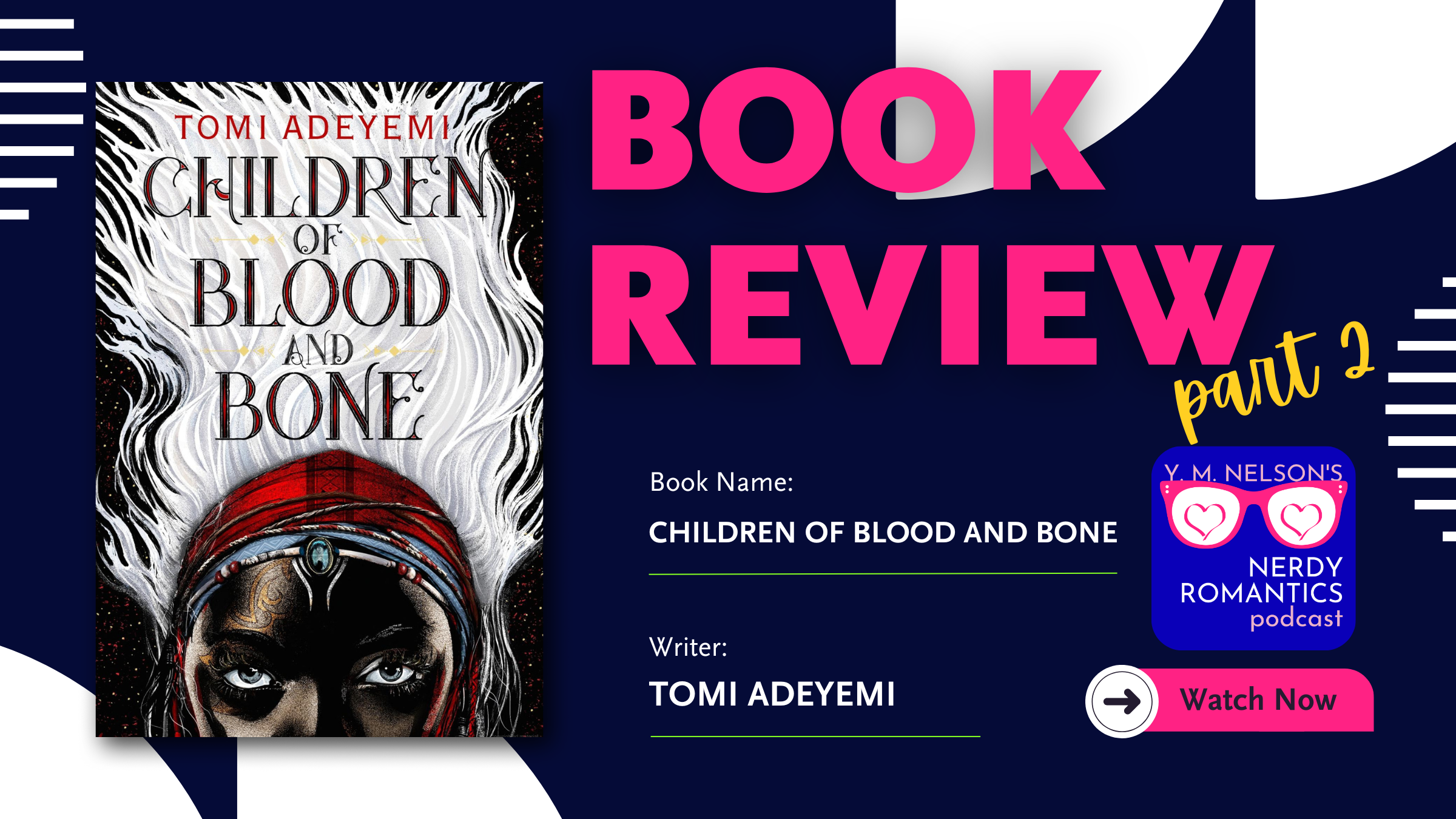
Children of Blood and Bone review, pt.2

Staci and host Y. M. Nelson wrap up discussion of this YA fantasy book with a little politics, world building, and look ahead to what the movie version of this book may entail. We finish our review with a Goodreads rating.
Did you miss part 1 of our review of this wonderful book? Then listen/watch here!
Topics Discussed (Click to jump to transcript’s section) :
- When magic means power – The politics of the story
- The politics of the book – The Author’s Note
- The World of Children of Blood and Bone
- Musing on the movie version
- The audiobook experience
- GoodReads rating
Meet this episode’s co-hosts

Staci:
While Staci represents herself here, she’s also a permanent guest on the L-5 podcast, a YouTube podcast reviewing newly-released movies and TV shows. Check it out!
Where to find books from the podcast:
Support Indie Bookstores by buying at Bookshop!
Click here

*The Bookshop.org link/image above is linked to a list of books reviewed on the podcast . By purchasing a book from there, you support independent book stores, and I will receive a small commission for each purchase when using these links. (This does not affect what you pay.)
Episode Available on
most podcast providers


Don’t have a podcast provider?
Listen to this episode here!
Watch the episode on YouTube
Episode Transcript
Y. M. Nelson: In this episode of Nerdy Romantics Podcast, we will continue our discussion of Children of Blood and Bone, a book by Tony Adeyemi, and we are going to give this one a Goodreads rating, so stay tuned for that discussion.
Remember, as with the last episode, this one will also have spoilers, so spoiler alert.
Y. M. Nelson: If you have read this book or want to even continue with the discussion, then stay tuned.
[00:00:47] When magic means power – The politics of the story
Y. M. Nelson: And, and you get that and you very much get that feeling at the end of this book. It’s like because you are wondering, near the end of the book, when you see people actually using magic and actually understanding something about magic and possibly having it, you wonder just like Zelie wonders: who should get magic?
She even, you know, kind of says this and- am I supposed be the one to tell people you should have magic and you shouldn’t? So that’s another thing that she goes through in the whole, I don’t want to lead because I don’t want to tell people, should not have magic. You know, I don’t wanna take away somebody’s magic. Or I don’t want to, you know,
have
Staci: to choose to give people magic or something like that. Who picks and chooses. And then as the course of the book, you see that. Especially the, the group that was oppressed, the Divines and how angry, you know, like they, their families were slaughtered and now if you get matching back, how are we gonna do this?
I mean, that’s one of the things I think when you’ll see later on, but also there things in the book, it’s like, and oppressed people, once they get their power back, how are they gonna react to the people who oppress them?
Y. M. Nelson: right.
Staci: And.
Y. M. Nelson: And, and that’s where, and that’s where for me, it really struck something in how similar it, this whole feeling is to American society.
And what happened after the Civil War when after the Civil War, there was a period of, begins with an R. But a period right after the Civil War where Black people were creating, cities. Black people were sitting on city councils. Black people have political
Staci: Governor, Senator was the first, during that time, during reconstruction, during that right after, and.
Y. M. Nelson: Yes. And then after that, the Ku Klux Klan came in and others, and started just erasing everything that happened. And, because we didn’t live during that time, we just know it from history or we learned it from, from trying to get little bits and pieces of true history, we learned it.
But because, we didn’t live through that time, we didn’t have that feeling of the fear that these people were having and the non fear and the, the, basic like, are you even having this fear?
Staci: Mm-hmm.
Y. M. Nelson: we don’t want to harm you. Why,
Staci: Yes.
Y. M. Nelson: this? You know, that whole. All the emotional and the things that they did because of fear and because of consequences that they feared would happen.
Right?
Staci: Yeah. But, oh, go ahead. Sorry.
Y. M. Nelson: no, go ahead.
Staci: Well, I mean, to me, I think what we’re also thinking about stuff that’s going on right now in another part of con part of the world
about people that were oppressed, who went through a you know, attempted genocide and then.
Y. M. Nelson: Yep.
Staci: Plus, they have power in place, what they may be doing to someone else now that they have power.
And I’m not gonna go into details on anything on that, but I think that kind of in a way kind of relates to, not relates to this book, but about the fear of, I guess those nobles thinking we did all this to them, now that they have power, what are we gonna do? What are they gonna do to us?
Y. M. Nelson: Right, exactly
Staci: which is not, I mean, which is both, you know, during Reconstruction and what’s going on now. That’s kind of some similar, some similarity similarities there. But it’s that fear and that fear of it.
And by, it’s kind of like when we talk about prophecy and stuff like that, when when, you know, we have the pro, what, who was it? And I’m gonna go to Greek folklore or whatever, Greek mythology where he was told that his son will kill him.
Who was that per his, his father was told that his son will end up killing him. So, he, he cast out his son but ends up doing the, ends up basically fulfilling prophecy by sending his son out to be raised by others, and then he comes back and kills him. And I think anyway, and so I think their thing is, no, it wasn’t Hades, it’s because the whole trauma No,
Y. M. Nelson: now you gonna make me look. You’re gonna make me look
Staci: I remember
Y. M. Nelson: Somebody put it in the comments below. If you are watching or listening to this, there’s a comment section.
Staci: It’s Oedipus!
Y. M. Nelson: Oedipus. Oh, yes, yes,
Staci: it’s mother is totally different. But the reason is he, he, ’cause he never knew that that was his father and mother because his father was told that his son would kill him. And so, instead of his mother having him killed whatever, he’s taken away.
Y. M. Nelson: Yeah.
Staci: And so, fulfilling the prophecy just because he could, he, instead of living with his son, being so fearful that that would happen.
And I think the same thing is it kind of with them, they were thinking that the dividers were gonna take everything from them. So, we’re gonna take everything from them first. And now we’re now in this part where, you know, once they get their power back, will they destroy them?
Y. M. Nelson: Right. Exactly. Exactly. And so, you know, you, you see that, you see that fear happen and that you, you see that happen through, throughout the book. The, the reader sees that because it’s already happened. Right? This is already happened. That’s the reason why magic is gone.
So, you see that evolve throughout the book as as a reader and you wonder, oh. What’s gonna really happen here? You know, you kind of have that feeling like, what’s gonna, what’s gonna happen is this, how is this gonna play out? You know?
And even though it’s happened in history, it’s happening right now. The fear is very, and too, with the, with that fear, fear is very irrational. It’s not rooted in it’s, and it never seems to be rooted in actual circumstance. Right. It is
Staci: Mm-hmm.
Y. M. Nelson: rooted in actual circumstances. It’s very much an irrational fear to retaliate against the people who have you have oppressed.
And it’s basically in your mind, right as the oppressor, it’s in your mind. You are the one that’s going to the worst-case scenario, most people don’t go to, they don’t do the worst-case scenario, right? It almost never happens. Actually, has never really happened. Usually what happens is something like an Oedipus kind of thing where the oppressor ends up screwing themselves over because of their irrational fear. That’s what always happens.
That’s unfortunately, I feel like that’s what’s gonna happen right now in our situation right now, because things are happening where know, me as a Black woman, I’m like, I’m not even getting in the middle of this, but you are acting off of some kind of fear and some kind of like, I’m losing my privilege, or something is happening here where you know the people that you’re oppressing or the people that you’re afraid of, know. They’re not feeling this way. Right. in other places in the world, you know, this is, this is happening too right at this point.
[00:09:13] The politics of the book – The Author’s Note
Y. M. Nelson: So, this is not a political show, but this very much is a political book. And even more so than what I thought when I first started reading it. Because when you read the author’s note, the author’s note speaks of where she was writing this, which is why I, I said 2018, but I think it’s 2020 now that now that I am saying this,
I thought it was 2018. I’m going to look at the the copyright page. And so, I can make sure. But the author’s note it is 2018, for some reason and, and stuff was happening in 2018, but for some reason I was thinking specifically George Floyd. But George Floyd is not the only not the only catalyst of this.
And her author’s note, Tomi Adeyemi talks about police brutality, and this is very much the inspiration: the, the ones that we’ve been hearing in the news and the ones that we haven’t been hearing in the news, but she mentions some of the names that we have heard in the news, you know and this is very much the inspiration or whatever mindset she was in when she wrote this. Know, the author’s note was at the end of my copy.
But I read that, I felt, okay, yeah, I understand where a lot of this is coming from. I understand why, the nobles are the way they are, and two this is all in one kind of cultural area, but these people have diverse, backgrounds and everything, but they’re all a part of Orisha, right? Culturally they all came up together, right?
This is, this is something that’s happening all together versus know, American society where we have people coming from different cultural perspectives, right? so culturally. All of the characters here at least kind of know culturally what other characters, like, they may not know everything about how they came up or everything like that, but they’re living in a way that they can access each other’s cultural whatevers, right?
Staci: In some ways it kind of reminds me, I know, we said racism, but also kind of reminds me a little bit of, you’ve read the book, you know, the Black Elite or you know, or you’re watching The Gilded Age and you’re seeing the you know, the have and the have nots, that kind of a thing where
Y. M. Nelson: Yes.
Staci: groups, and it was, and you know, with that all of them were, are, were Black. But you had those like, well, I would just, I didn’t descend from slaves, you know, we’re lighter skinned here and versus…
Have you been watching The Gilded Age? I’m not trying to talk about another show or anything, but
Y. M. Nelson: I, yeah, and I’ve watched some of it, but I haven’t watched this season, but I’ve been kinda looking at the online stuff of this season and I’m like, okay, yeah, I need to go back and
Staci: yeah, you do because it has a lot more into it about Peggy and her life, about Peggy and her, and so you kind of see where that whole thing about the Black Elite, which if you read also the book about the Black Elite, which is not fictional, but actually real talking about our Black Elite, about how we had the whole paper bag, societies and all that kind of stuff.
This kind of reminds me of that in the sense that everybody is from the same Orisha. They’re same kind of environment, but you have the, brown people exercise and then you have the others and that kind of thing. I think that kind of reminds me a little of that kind of, it’s a crossover of two of different things when you read the book is,
you know, that whole thing about, even though they may have the same country, they’re not coming from different parts, like the Melting Pot of America, same country.
But we have this group over here who’s nobility and they tend to be a little bit lighter, or at least they, they, I think that lighter skin is more, a little bit more superior than the others.
And then the, and the others, they have the different groups. You’ll have the people, you’re a seaside person, you’re from the, from the coast versus you’re from here.
And then later on you’ll see when they actually come back with their their gifts. Their gifts are actually different, which makes them part of different groups in the, in the whole thing about the divines, about which group you’re in for divine. So, a lot of separation, but at the same time, they’re all living within the same country or, you know.
Y. M. Nelson: Exactly. Yeah. You know, it also makes me think about, there was this show, it only lasted for a season but it was also from a book. And it was talking about kind of the, the Black Elite and I Were they at Martha’s Vineyard? Oh gosh, I can’t remember the name of that show. Cannot remember the name of the show. But it was from a book and it only lasted one season, but it was basically kind of like about the Black elite and you know, and you know, how they move through society, and who they should hang out with and who they shouldn’t hang out with. Something of like Our Kind Of People or something,
Staci: That was what I was thinking. I said the Black Elite, but I read Our Kind of People and the Black Elite. So, I got both. I’m.
Y. M. Nelson: Yeah. It’s like I know it’s there somewhere. Yeah. And and Isabel Wilkerson’s book Caste that, although that’s nonfiction more memoir, it also gives you kind of a, a similar kind of feel . So, it’s very much foundation is African folklore, but on top of it, I feel the diaspora.
[00:15:23] The World of Children of Blood and Bone
Y. M. Nelson: Right. I feel the African American experience is influenced in this book, which also, you know, is like bringing me in even more. And the fact that. It, you know, it feels very contemporary, you know, even though we’re not even sure how contemporary it is actually.
But you know how like a lot of fantasy books, especially European fantasy books, they’re always centered in some kind place or it is not always contemporary, but this feels, whether it is or not, it feels very contemporary and it’s probably because we are having these of,
Staci: I think it’s ’cause the things that we’re talking about and discussing that kind of thing. Because, I mean, because if you think about for whatever reason I’m thinking about Star Wars and how he’s in, in the middle of nowhere, but it’s advanced technology.
It’s just, you know, he has two droids and he’s just walking every- I mean, it’s not like it’s in your face about where like there are people going into space there, but it doesn’t really feel like a space. I mean, it’s a space drama, but it didn’t really feel like it.
And so, you’re not really sure until like, you lead to as you go on you realize that it’s not really, it’s not like some sort of steam punk version of anything. But, but it, it also doesn’t feel primitive. But I think part of the reason is because of who’s writing it.
You know, when a lot of people do stuff, like if it’s African folklore and all that, they make it sound like. Like they’re in the dust of dirt. I mean, you know how they make it sound like they’re so primitive, and I guess, but she doesn’t do that.
And it’s like, well, when I went to India, people were like, oh, you gonna see, you know, somebody, you know, join on the flute and snakes or something like that.
I’m like, what? You know
Y. M. Nelson: Yeah.
Staci: what it.
Y. M. Nelson: a st a stereotype. Right. And it is because we only see that one image. Right. And it, and you know, it’s, it’s so interesting because, I said this earlier and we were talking about Lagos. People say Africa, they think, you know people, you know out in either the jungle or the desert. Right. It’s gotta be one of the two mud, right. Some kind of mud hut. And they have on very little clothing.
And it’s like, have you been to Nigeria? I mean have you been to Lagos? This is like a major city, you know, that rivals something like a New York, right? Rivals something like, you know, in Atlanta it’s, it, it is major city here, you know, and that’s not the only one.
And I’m just thinking about Lagos because there is a city in this book called Lagos. immediately that’s what I thought of. I thought of city and I, you know, I think it opens people’s eyes to the fact that Africa is a continent, everybody, with a bunch different countries inside of it, and even those countries have cities and towns.
So, there are city people here. You know, and the nobles are there, there are townspeople here. There are, oh, when they went to the town with the where they, they went to the town where they had the the competitions, we’ll say that, trying not to spoil it. You know, that was very much an urban kind of feel.
It was very much, like going to, you know, any kind sports game, like a an NFL game or NBA game. It, it felt like, you know, being in that kind of atmosphere. And then they’re in very spiritual places, and then they’re in the desert, and then they’re on an island. I mean, these very different settings, meeting very different people.
Staci: It kind of reminds me like of Wakanda, the early years Ancient Wakanda, you know? You know, not like, it’s like it’s now like it’s a real, you know, like not modern day Wakanda, but early
Wakanda, you know?
Y. M. Nelson: right?
Staci: know.
Y. M. Nelson: Wakanda. Yes. But yes, very much so. Like when we first saw know, Ryan Coogler et al’s vision of Wakanda, you see, farms and ranches and you see a very industrialized city at the same time.
And then you go up into the mountains, and you see, you know, mountain folks. So, and, and, and in each place, you are seeing very different people, right? And so, even if these people just all look like Black folks to you, these are very different people.
So, this is also, this is also what I love about this book. In this one book, we get so many different representations and just like what you’re saying about we get round characters. I love the fact that we get a bunch of round characters with all of these representations. All these representations of folks are not just caricatures. In fact, most of ’em aren’t caricatures.
The only ones that are really caricatures are ones that we see in the very end, and because this goes on in a series, I’m kind of wondering where some of them, like, do we see some of them crop up later on, you know?
But that’s what I love about this book is, and I keep saying this on a lot of the episodes, and I’m gonna keep saying it, Black people are not a monolith, and African people are not a monolith. They’re not all primitive people with a little bit of clothes on, speaking a language that you don’t know anything about. Right.
Staci: Yeah.
[00:21:50] Musing on the movie version
Y. M. Nelson: You know, the fact that we see in just this one book, the myriad of people, the myriad of Black folks is very heartening to me. I love it. love seeing this, and the fact that they now are making this into a movie, it’s like, oh, I, I can’t wait. I just,
Staci: I, I know they were making two movies, but I have not looked into like, who’s gonna be the cast. I haven’t tried to look in any of that yet to see anything. But hopefully they do it justice for the whole, not just in characters, but in just the locale, and how it’s gonna look.
I mean, hopefully, hopefully it matches what I see, but I mean, it may, hopefully they do it better, too. They might do it better in their representation of everything.
Y. M. Nelson: I totally agree. I, hope especially with the settings, which, we kind of briefly talked about but I hope they really do it up with the settings
Staci: And I mean, I know it’s,
Y. M. Nelson: I see it in my mind.
Staci: it’s gonna be beautiful, you know, it’s gonna be like, oh my God.
But and also like, I wanna, I’m kind of worried about how they’re gonna do what was it? A, a Lionaire. ‘Cause I could not really think of a great how to do that and make it,
Y. M. Nelson: Yeah.
Staci: every time I think of it, I think
Y. M. Nelson: yeah.
Staci: how you.
Y. M. Nelson: You know, and when they, said Lionaire, and of course I’m thinking, because I recently saw that they actually are going to do a Thundercats movie. I keep thinking Lion- Thundercat, why? that, but that’s not, what the Lionaire is.
But it’s like horns involved, there’s all this other stuff going on, and yeah, I’m wondering how they’re going to do that. And because they’ve named this Lionaire. Lionaire’s name is Nala, and, or at least I think that’s how we say that Nala. And so even the Lionaire has a personality. So, I’m like, how are they gonna do that in the movie? But I can’t wait.
Staci: Yeah.
Y. M. Nelson: but yeah, it is, it the, the cast of characters. You know, I just saw the actors when I first saw the poster with it.
But, you know, now that I’m looking them up, they actually have names going with them. And of course, Viola Davis as Mama Agba.
Staci: Oh. Oh. See, I haven’t seen any, all like you say, saying
what? I don’t even know. Yeah.
Y. M. Nelson: Yeah. I, I just saw the poster with all of their faces on it, but I don’t know who was playing what, and I just looked it up today for this podcast.
Viola Davis is Mama Agba. Yes. I, I can, I can see that happening. Amandla Stenberg, she is Princess Amari, she
Staci: Okay. Yeah.
Y. M. Nelson: the Hunger Games.
Staci: Complex. So, I was like, okay, not too light, but I think it’ll match up.
Y. M. Nelson: Right. Right. Exactly. you know, I like the fact they’ve got Idris Elba, he playing Lekan who’s the Sentaro they meet in Chenoble, the temple. That makes sense. This is an interesting, this is an interesting pairing. So, they’ve got Chiwetel Ejiofor as King Saran.
Staci: Myself.
Y. M. Nelson: Yeah. While you’re doing that. Yes. So, I’ll say this for the podcast. They’ve got Chiwetel Ejiofor at playing King Saran, and they’ve got Regina King playing Queen Nehanda which is Princess Amari’s mama. So that’s, that’s interesting to have them do that.
And and Cynthia Erivo who we know from Wicked is playing Admiral Kaea believe that’s how you pronounce that.
Damson Idris is playing Prince Inan.
Staci: Okay.
Y. M. Nelson: I’m, I’m not, I’m,
Staci: him play anything? Like you saw him in
Y. M. Nelson: isn’t he on the Chi? Is he on the Chi?
Staci: No, he’s on I have it in my head. It’s on Hulu. It’s about the crack cocaine
Y. M. Nelson: Oh, Snowfall.
Staci: Snowfall.
Y. M. Nelson: Dude.
Staci: Yes.
Y. M. Nelson: yes, yes, yes. And I like him on that. And I think, okay. So yes, I think it’s more star power there. I don’t know. I, I don’t know how that’s gonna play out. That’s gonna be interesting.
Staci: Well, I’ve seen him play, I’ve played in something else. I mean, even in Snowfall when you see him in real, not real life, but like, you not gonna know him, you know,
see.
Y. M. Nelson: Not playing a character.
Staci: And then seeing him playing that character, especially with his accent, he has an English accent and he plays that character’s like, oh, I didn’t even realize he did it so well.
And then he, he was on an interview with someone, asked him about was they were telling him about how someone asked Denzel Washington about him.
Denzell was like, “who is that?”
And he did a Denzel impersonation. That was so good. I was like, okay.
Y. M. Nelson: Wow.
Staci: You, he did like you know he wasn’t offended that Denzel didn’t know at the time, but was like he did his impersonation of Denzel that was just right on.
Y. M. Nelson: Oh my gosh. I’ve gotta find that. And then another main well obviously Zelie Zelie is played by Thuso Mbedu, and I’m sorry if I’m mispronouncing her name. And T’zain is by Tosin Cole. Tosin Cole is Mike on gosh, what is the show? The show is on Netflix Super Cell.
Staci: Oh,
Y. M. Nelson: Yes.
Staci: character.
Y. M. Nelson: He’s playing Zane, Z’s brother.
Staci: Oh.
Y. M. Nelson: Yes. I was like, they look very familiar, but yes, Super Cell. So, I’m like, this is really a serious lineup right here. And, and I can see, I can see them playing these characters. I can see it. I can see it, you know, it’s, I’m just, I’m just really excited. I’m excited to see what they do
Staci: Mm-hmm.
Y. M. Nelson: And like you, I’m also very excited to see the settings,
Staci: Yeah. Don’t
Y. M. Nelson: hope they do those well, because
Staci: do?
Y. M. Nelson: that’s part of the, the beauty of the book to me.
Staci: Yeah. And I’m not, I mean, I, hopefully they’ll do it. Well, sometimes on certain books, like of this magnitude,
Y. M. Nelson: Yes, it’s
Staci: I’m not sure. It’s a lot. And sometimes I’m, I’m fearful like, you’re not gonna give them, you know, three movies to get a ring to a th- you know, you’re not gonna give them that. So sometimes I’m like, if they can’t make it as a movie, certain things I prefer, that I prefer as a TV series.
On a big budget kind of a thing. But you know, I, we’re probably never gonna get something like that. But the movie, I just hope it you, I just hope it, and I’m not sure how they’re gonna do it. So, I mean, I hope it’s not a World War Z thing. I like that book, but that movie was awful.
Y. M. Nelson: Yeah, that’s what a lot of people have said. But but I agree with you there. I believe that the story and how they could play it out works better to me as a TV series if they had an unlimited budget. But yeah.
But the grandeur of some of this lends itself to a movie. Yeah. Yeah. But I mean, we’ve talked a lot about a lot of stuff going on here and we’ve talked a long time.
I do briefly wanna mention that this is definitely fantasy, but there is a romance element in here and I think the romance element is really cute.
Staci: Definitely YA.
Y. M. Nelson: But it’s definitely YA and that’s pretty much all I’m gonna mention of it. Because so many other things here are working towards the wonderfulness of this.
[00:30:24] The audiobook experience
Y. M. Nelson: The only other thing that I will also mention is with this experience is that at first, I well I got this, I got this from the library, and I actually asked for the audiobook. I asked for the eBook. I asked for whatever I could get, right? So, the first thing that I got was the audiobook. And when I got the audiobook, and the narrator is Bahni Turpin. I hope I’m pronouncing her name right. It’s spelled B-A-H-N-I. So, I, that it’s Bahni.
But when I first got the audiobook in the beginning of the audiobook, which is at the end of some of the eBooks, at the beginning of the audiobook, they there is a list of all the magi clans, and I believe there are 11 clans or 12 clans. But there are are a list of all the clans. There are, there are a list of the gods that go with the clans and then there are powers like what the clan’s magic power is.
As she was reading that, and even though I did know it was African folklore, as she was reading it, I said, I need to have a visual to see the words so then I got the eBook, but the narrator and this audiobook is amazing. I really liked it.
What was your experience? Did you do eBook, audiobook? How do you remember?
Staci: do audio books. I still, ’cause I was trying to listen to it earlier to, to refresh my memory on it. But I did an audio audible on the same, same this, the same narrator that you’re talking about. So.
The only thing I don’t care much for Audible is for things like that. ’cause when I was listening to it over, you know, I’m driving, so I’m listening to it and I was like, dude, I wish I could go back.
Just, you know, just tell it, Hey, read me the beginning of it to, for those for those groups of people. Because that whole thing, when they talk about the different the different groups of Diviners and everything like that, you have all that. And then I’m trying to remember from the beginning of the book who was, what, that kind of thing.
And that’s the only problem with any audio books they have. Something like that. It is really hard for you to kind of, you know, you can’t thumb back to it to see, oh, that’s what we were talking about now. They were referencing this you.
Y. M. Nelson: right. I, I don’t remember. Yeah. And then too, because it is not in, a language that, is recognizable just by, hearing to me, I wanna see it as well, I mean, I know what Yemaya looks like, but I don’t hear it every day. So, it’s like, okay, what? and the Oyu Clan and all this other kind of stuff, it’s like, I don’t hear these words every day and I would like to actually see the words and even with some of the names of the cities as well, you know.
The other thing that you miss, of course, with the audio book is you miss the, map. Yeah. And it’s like, when you see the map, you kind of wanna go back to the map as they’re going through different places, you wanna go back to the map.
[00:33:49] GoodReads rating
Y. M. Nelson: But anyway, like I said, we’ve talked a a lot about this and so let’s finally give this one a good reads rating and to remind as well as to remind our audience of the Goodreads rating. One is, we did not like it. Two stars. It was Okay. Three stars, we liked it. Four stars, we really liked it. And five stars. It was amazing. Staci, what would you give Children of Blood and Bone by Tomi Adeyemi?
Staci: Well, I think if you’re looking for a book that has, a hero who doesn’t wanna be a hero, so you have that full-fledged characters and adventure story, a girl finding her place in the world. If you want all that in one book, this is the book to get.
And I would give it five stars because, I mean, it’s been a long time, not, not a long time, but it’s been like I said, like it could have been like -20, so it might have been like four or five years since I’ve read this book, but the fact that I can remember so much of it,
Y. M. Nelson: Yeah.
Staci: And from that, indicates how, how it stuck with me for such a long time.
And to me, that’s one of the good things about a good book is that if you, even long after you read it, the themes of it, the character, if they stay with you for such a long time, that to me indicates is a good book. And, and yeah, so I would say five stars.
Y. M. Nelson: Oh, okay. Yeah, gonna agree with you on all those points. I’m giving it five stars as well. I would also say personally, my experience with it and why I’m giving it five stars is that I was so engrossed in this book I’m kind of glad that my employment state is what it is because I just, kept turning pages and kept turning pages and it was two o’clock in the morning, and I kept turning pages.
I had to force myself to put this book down once I got into this book and for it to be a YA book for me as a person who has not been YA in some time, to feel the things that I felt from this book, it’s definitely five stars. And immediately after I ended it, I wanted to pick up the next book.
The only reason as I said that I didn’t pick it up is because I didn’t wanna confuse the books as we were talking about them on the podcast. But now that we’ve talked about them, I’ll be getting the next book.
Staci: Yeah, it was. I really enjoyed this. Then trying to listen to it again. I’ve been just busy this week. I was going to listen to it again, but I just as a person who, like we’ve tried to read YA since then and I have not been able to get into any of the-, any of before, but this one and this one actually made me think that I could get other YA and then I realized, no, the book was good, but I don’t that-.
That book was good. I still can’t get it to YA. Just, I’ve just never found another book that really made me wanna get into YA as, as this was. And it was a very good read. I truly enjoyed that book.
I’m telling you, I got went from here to Alabama and like, woo, I’m here. You know? And then like you said once I got home, because I think-. I forgot how many hours it is. How many hours?
Y. M. Nelson: Is. It is like something like 10 or 12 or
Staci: Seven though, it’s more than 17 hours. Because I remember going home and I, once I even got that to going to visit my parents, at night once I was in my room and all that: “okay, I’ll put it up.”
And I stayed at like two o’clock just listening to it and then, “lemme go to bed.”
And then I, because I was supposed to just listen to half it
there.
Y. M. Nelson: Yeah, you’re like, yeah, that’s it. The, the story is compelling. The characters are especially compelling. The world building is amazing, hands down, amazing. And you know, even though I’m not an African, I feel like I’ve been represented some in some way, you know? So, it’s just, it’s all around a wonderful book.
And yes, I agree that this is the reason why it’s five stars is because you can’t just pick up any YA book, which, I pick up some YA romances every now and then, and it’s very much YA. Right? It’s very much in that head space and I have not been in that head space. But this one, it transcends that head space.
Staci: I mean I,
Y. M. Nelson: to more than just YA.
Staci: Yeah, it speaks to a lot more than y and like you said, it’s a little bit of a romance in it. And again, not so much. ’cause a lot of times for YA Romance it’s like, dude, I’m not even this. I want adult romance. Not YA. But
Y. M. Nelson: We’re not this angsty anymore.
Staci: Yeah, we’re not, and but when you’re reading a book, I mean, that’s a part of it.
That’s not the whole story of it. And so therefore that adventure that. All that other stuff that goes with that.
This book is, that’s just like a small part of it, but it does make for it more interesting story as you, especially as you read and those characters, how complex that becomes
that it is.
And it, and it grows that that whole romance grows like they do. And I’m not saying it becomes like adult, but I mean it grows because they grow, and it grows appropriately for their age bracket.
Y. M. Nelson: Exactly, exactly. It’s very much appropriate for their age group. And I felt as someone who’s not part of their age group that this is appropriate for me reading it and, you know, being okay with what I see and what I don’t see, which is good.
Well, Staci, I’m so happy you came on to talk with me about this book! As soon as I finished, I was like, I knew I needed somebody to talk with about this book, and so I’m happy you came on, and I’m happy you liked it as much as I liked it too. So, thank you for coming on.
Staci: You are welcome; it was my pleasure.
Y. M. Nelson: Hi. Isn’t it great when you find awesome reads like the ones on this episode? If you liked getting these book recs and want more, then subscribe to Nerdy Romantics newsletter at ymnelson.com back slash subscribe. Nerdy Romantics newsletter not only has nerdy and romantic recs, but sneak peeks and exclusives of my spicy, nerdy romances and love stories.
I love talking about sci-fi superheroes, fantasy, and romance books, movies, and shows with my friends. So, share this podcast with your nerdy, romantic friends. Thanks for listening and for watching.
Want these show notes in your inbox?
Subscribe to Nerdy Romantics Newsletter
Share this:

Discover more from Nerdy Romantics Podcast
Subscribe to get the latest posts sent to your email.


